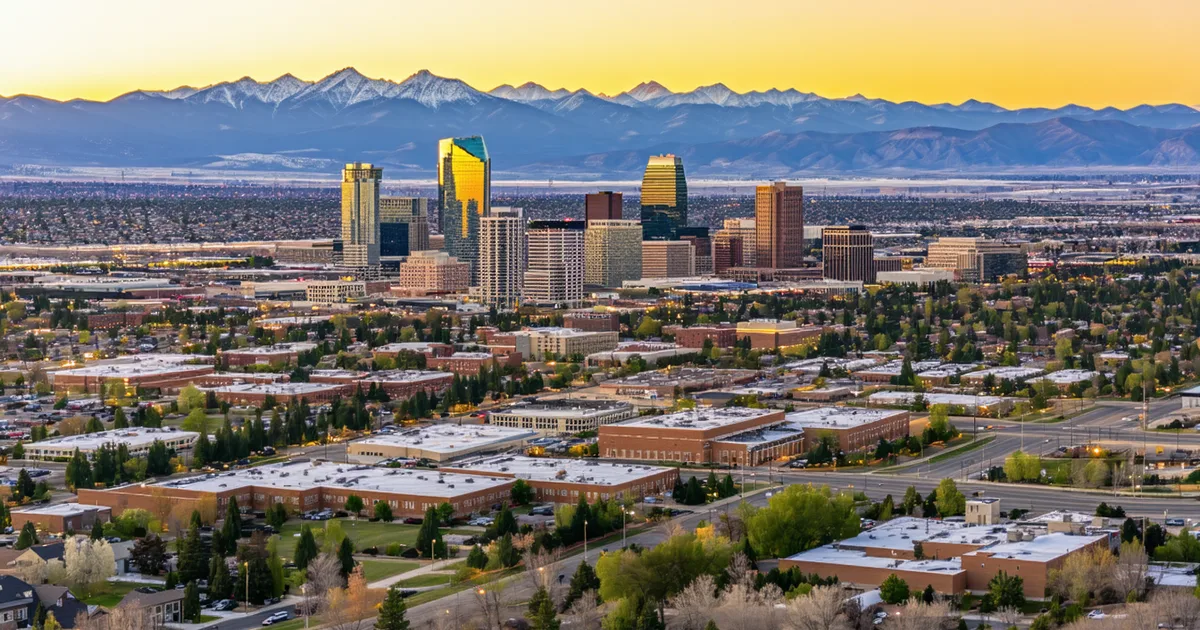
If you work in battery manufacturing and you're not watching what's happening along the Wasatch Front corridor, you're missing a real development. Utah has accumulated a combination of materials science talent, proximity to mineral resources, industrial infrastructure, and university research depth that is quietly positioning the Salt Lake City metro as a meaningful node in domestic battery supply chain development. This isn't a boosterish claim — it's an observation from a company that chose to build here and has spent time understanding why the geography makes sense for this industry.
We're not saying Utah is the next Southeast Michigan or that it will displace any established battery manufacturing hub. We're saying that for companies working on the process technology layer — equipment, software, materials characterization, electrode processing — the talent and proximity dynamics here are better than the national profile of the region suggests.
The Materials Substrate That Most People Miss
Utah sits on some of the most significant lithium and critical minerals geology in the Western United States. The Sevier Desert basin and areas near Wendover have been subject to increasing lithium brine exploration interest. Bingham Canyon — the Kennecott copper mine visible from the Salt Lake Valley — has historically been one of the largest copper mines in the world, and copper is a battery materials feedstock for current collectors, busbars, and motor windings.
More directly relevant for current manufacturing activity: the I-15 corridor from Provo to Ogden hosts a concentration of specialty chemicals and industrial materials companies with roots in defense and mining supply. This industrial base, while not specifically battery-focused historically, provides the reagent supply, precision fabrication, and hazardous materials handling infrastructure that battery manufacturing requires. You can source electrolyte solvent precursors, separator handling equipment, and electrode processing fixtures within a 60-mile radius of downtown Salt Lake City at a density that would be harder to replicate in, say, Reno or Denver.
University of Utah: The Talent Pipeline
The University of Utah's College of Engineering has been producing materials science, chemical engineering, and electrical engineering graduates for decades, many of whom have stayed in the region due to quality-of-life factors and a growing tech sector centered on the Silicon Slopes corridor in Utah County. The U's chemistry department has active research programs in solid-state electrolytes, polymer separator materials, and electrode characterization that are directly relevant to cell manufacturing process development.
Utah State University in Logan (90 miles north) has historically been strong in aerospace and defense materials — disciplines that share meaningful methodological overlap with battery manufacturing, particularly in thin-film deposition, hermetic sealing, and precision electrochemical characterization. USU graduates have fed into the Hill Air Force Base maintenance and manufacturing ecosystem for decades; that same precision-manufacturing culture transfers well to battery production environments.
The practical implication: a battery manufacturing company looking to hire process engineers, materials characterization specialists, or controls engineers in Salt Lake City is recruiting from a pool that has more relevant academic depth than the region's current industry profile would suggest. The talent here wasn't trained for battery manufacturing — it was trained for adjacent disciplines that transfer.
The Silicon Slopes Effect on Process Tech Talent
Utah County's Silicon Slopes corridor — Lehi, Provo, American Fork — has spent 15 years building a software and SaaS talent base. More relevant for manufacturing process technology: it has built a significant concentration of embedded systems, industrial controls, and data infrastructure engineers who are comfortable with high-volume telemetry, real-time data pipelines, and hardware-software integration problems. These are exactly the skill profiles needed for formation monitoring systems, cycler integration, and manufacturing execution system development.
The cost differential is also real. A controls engineer or ML engineer in Salt Lake City typically works at 20–35% below San Francisco Bay Area rates, with meaningfully lower cost of living — a material consideration for bootstrapped companies trying to build deep technical teams without dilutive capital raises. This isn't a permanent arbitrage (the wage differential has been compressing for several years), but it remains meaningful at this point in time.
Infrastructure for Pilot-Scale Production
One of the practical challenges facing early-stage battery technology companies is finding appropriate facility space for pilot-scale work. Formation rooms require temperature and humidity control (typically 25°C ± 2°C, <10% RH for cell assembly), clean electrical capacity for formation cycler banks (40–120A per channel at 24–48V, multiplied by hundreds of channels), and appropriate hazardous materials compliance for electrolyte solvents and lithium handling.
Salt Lake City and the surrounding metro have a supply of light-industrial and flex-industrial space that is buildable to these specifications at costs substantially below comparable space in California, Michigan, or the Research Triangle. Power costs in Utah (Pacificorp territory) are competitive with national industrial rates. The permitting environment for hazardous materials facilities, while not trivial, has been navigated by enough defense and mining contractors that the local inspectors understand industrial chemical handling — a small but real operational advantage compared to jurisdictions where a lithium-handling permit application is genuinely novel.
What's Still Missing
It would be dishonest to write about the Utah battery cluster without acknowledging its current limitations. There is no major Tier-1 cell manufacturer with production operations in Utah — the closest high-volume cell production is in Nevada (the Storey County Gigafactory), and the Southeast (South Carolina, Tennessee, and Georgia have captured the bulk of recent announced gigafactory investment). That absence means there is no local ecosystem of suppliers specialized to gigafactory-scale production: no formation cycler service depots, no local slurry supply chain, no pack assembly Tier-2s.
For companies working at pilot scale or on process technology development, this gap matters less — you're not trying to source cathode active material locally, you're trying to find materials engineers and controls engineers and industrial space. For companies planning volume cell production, Utah's current cluster is a technology development hub, not a manufacturing destination in the way that Tennessee or Michigan are.
The bet on Utah, if you're making it, is on the talent and technology development phase of the domestic battery supply chain build-out. The hypothesis is that process technology developed and validated here — formation monitoring systems, electrode characterization tools, electrolyte analytics — can be deployed to gigafactory locations wherever those end up being, while the development teams remain anchored to a geography with strong hiring, reasonable cost structure, and proximity to materials science research. Whether that hypothesis plays out as domestic gigafactory investment continues to flow depends on how the regional talent pool develops over the next 5–7 years.
From where we sit in 2025, the foundation is more substantial than most people outside the region realize — and the window to hire the relevant talent before competition for it intensifies is shorter than it looks.